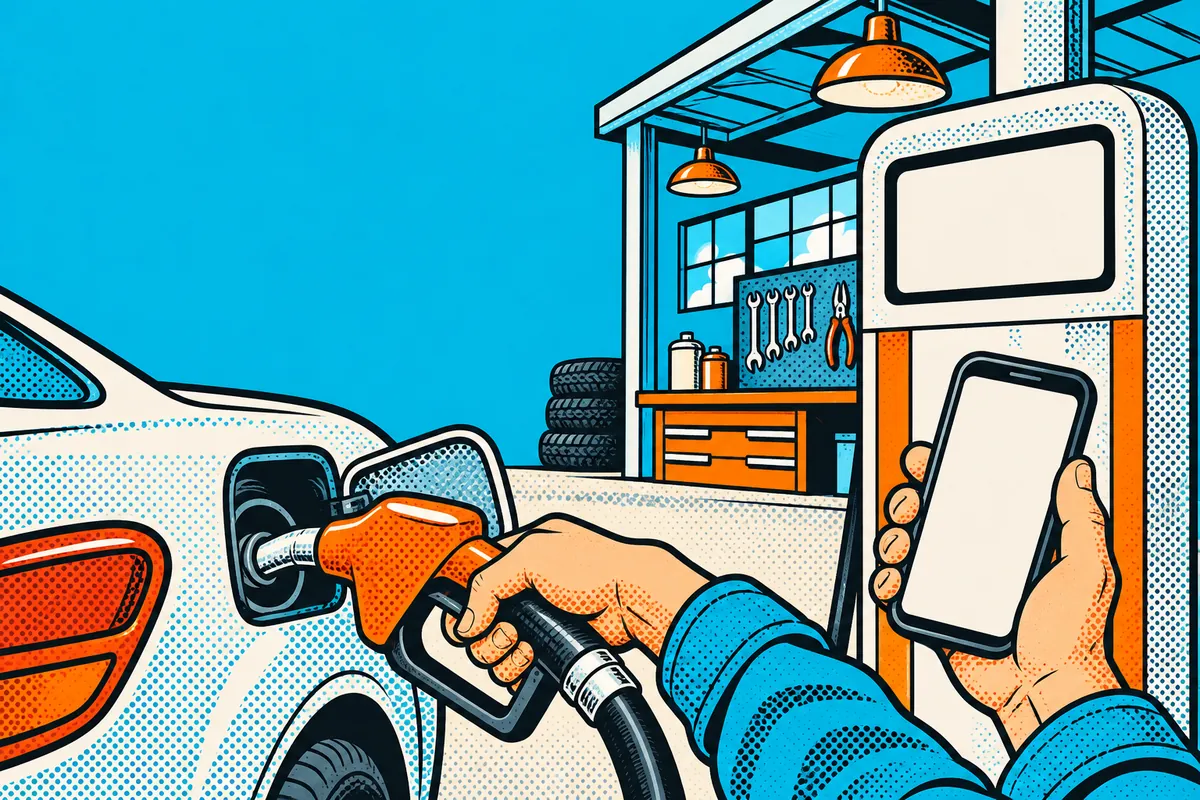
How to calculate MPG step by step
- Fill the tank until the pump clicks off. Do not top up past the click.
- Write down the odometer reading (or reset a trip meter to zero).
- Drive as you normally do until you need fuel again.
- Fill until the pump clicks off again, at the same pump if you can.
- Write down the gallons added and the new odometer reading.
- Divide the miles driven by the gallons added.
| Example | Figure |
|---|---|
| Odometer at first full fill-up | 41,250 |
| Odometer at next full fill-up | 41,592 |
| Miles driven | 41,592 − 41,250 = 342 |
| Gallons added at the second fill-up | 11.4 |
| MPG | 342 ÷ 11.4 = 30.0 |
The gallons you add at the second fill-up are the fuel you burned since the first, because the tank was full both times. That is why this is called the full-tank, or tank-to-tank, method.

MechLog calculates MPG (US or UK), L/100km or km/L by the full-tank method from each fill-up you log, and handles partial fills the way described above. Get it on Google Play
Partial fill-ups
If you only put in some fuel, you cannot work out MPG at that stop. Keep counting until the next full fill-up, then add up all the gallons since the last full tank.
| Fill-up | Odometer | Gallons | Full tank? |
|---|---|---|---|
| A | 41,592 | 11.4 | Yes |
| B | 41,750 | 5.0 | No |
| C | 41,980 | 9.2 | Yes |
From A to C: 41,980 − 41,592 = 388 miles on 5.0 + 9.2 = 14.2 gallons, which is 27.3 MPG. Dividing only the last leg (230 miles) by the last fill (9.2 gallons) gives 25.0, and dividing the first leg by the partial fill gives 31.6. Neither is right, because a partial fill does not tell you how much fuel was used.
Average MPG over several tanks
For an average, divide total miles by total gallons. Do not average the MPG figures of each tank.
| Method | Calculation | Result |
|---|---|---|
| Total miles ÷ total gallons | (342 + 388) ÷ (11.4 + 14.2) = 730 ÷ 25.6 | 28.5 MPG |
| Average of the two tank figures | (30.0 + 27.3) ÷ 2 | 28.7 MPG |
The gap is small here, but it grows when tank sizes vary. The first method weights each tank by how much fuel it actually used. Several tanks also smooth out small differences in where the pump clicks off.
US gallons, UK gallons and L/100km
A US gallon is about 3.785 litres and an imperial (UK) gallon is about 4.546 litres. The same car gives a higher MPG figure in UK gallons, so check which one a figure uses before you compare.
| Unit | Formula | Example tank (342 mi, 11.4 US gal) |
|---|---|---|
| MPG (US) | miles ÷ US gallons | 30.0 |
| MPG (UK) | miles ÷ imperial gallons | 36.0 |
| L/100km | litres ÷ km × 100 | 7.84 |
| km/L | km ÷ litres | 12.8 |
- MPG (US) to L/100km: 235.2 ÷ MPG
- MPG (UK) to L/100km: 282.5 ÷ MPG
- MPG (US) to MPG (UK): multiply by about 1.2
L/100km works the other way round: a lower number means less fuel used.
Fuel cost per mile and per trip
Cost per mile = price per gallon ÷ MPG. At $3.50 a gallon and 30 MPG, each mile costs about 11.7 cents.
For a trip, divide the distance by your MPG to get the gallons, then multiply by the price. A 450-mile trip at 30 MPG needs 15 gallons; at $3.50 that is $52.50. Use your own measured MPG for the kind of driving the trip involves, since highway and town figures differ.
Why your figure differs from the dashboard
Trip computers estimate fuel from engine data and can read a little high or low. Official ratings come from standard test cycles, and real driving often differs. The figure from your own fill-ups is the one to trust for your car.
If your MPG drops and stays down over several tanks, look at tire pressure, roof boxes, extra weight, more short trips, or cold weather before assuming a fault. FuelEconomy.gov has driving tips and maintenance tips that affect fuel use. A drop with no obvious cause is worth mentioning at the next service. To see how fuel fits into the full running cost of the car, read the cost of owning a car.
Let each fill-up do the maths
Log the odometer, volume, cost and whether the tank was full. MechLog works out your fuel economy and shows the average with a trend arrow.
Get it on Google PlayiPhone version coming soon
More guides
- How Often to Change Oil: Reading Your Interval CorrectlyHow often to change oil depends on your manual, your oil type and how you drive. How to find your interval, when the severe schedule applies, and the time limit to watch.
- Car Maintenance Schedule by Mileage and TimeBuild a car maintenance schedule by mileage and time from your owner's manual: monthly checks, regular services, the 30-60-90 milestones and age-based items.
- Car Maintenance Log: What to Record and a TemplateA car maintenance log template with the columns that matter: date, mileage, work done, parts, shop, cost and receipt. What to record and how it helps at resale.
- Cost of Owning a Car per Year: How to Work Out YoursWork out the cost of owning a car per year, per month and per mile: depreciation, insurance, fuel, maintenance, tax, parking and finance, with a worked example.
Published by Zoranta, the developer of MechLog.