What counts as proof of purchase for a warranty claim
Warranty coverage runs from the purchase date, so the manufacturer needs a document it can trust for that date. These are the common types, roughly from strongest to weakest:
| Document | Usually accepted? | Notes |
|---|---|---|
| Original itemized receipt | Yes | Should show the store, date, product and price |
| Online order confirmation or invoice | Usually | Print or save the full order page, not just the shipping email |
| Gift receipt | Often | Shows the date and store, though not the price |
| Bank or credit card statement | Sometimes | Needs to show the seller and date clearly; it does not show the model |
| Store loyalty or account purchase history | Sometimes | Ask the store to print or email the record |
| Delivery or installation paperwork | Sometimes | Helpful alongside another document |
| Product registration with the manufacturer | Depends on the brand | Some makers use it to confirm the date; others still ask for a receipt |
Many brands also require the item to come from an authorized seller. A product bought from an unauthorized marketplace seller may not be covered at all, even with a perfect receipt.
Details the document should show
- The seller's name
- The purchase date
- The product, ideally with the model number
- The price paid
- On some claims, the buyer's name, which matters if the warranty only covers the original owner

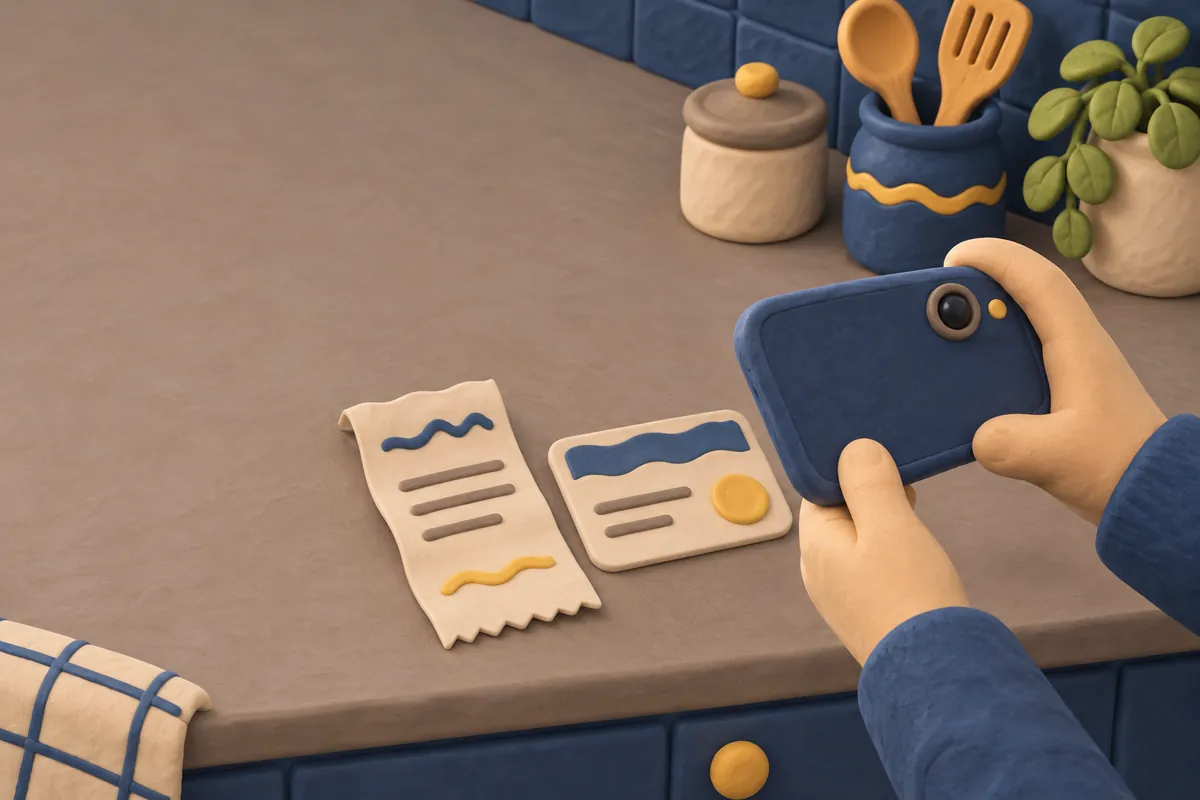
Manual Shelf lets you photograph the receipt and warranty card for each item, set the warranty end date, and get a reminder before it runs out. Get it on Google Play
Warranty without a receipt: what you can do
Losing the receipt does not always end a claim. Work through these before you give up:
- Check your email and online accounts. Search for the store name, the brand or the word "order". Online purchases leave a confirmation behind.
- Ask the store. Many retailers can look up a purchase from the card you paid with or your loyalty account and reprint the receipt.
- Pull a card or bank statement. It proves the date and the seller, and some manufacturers accept it.
- Look for a registration record. If you registered the product with the maker, the date is already on file.
- Ask about the manufacture date. Some companies will use the date code or serial number instead. Coverage then counts from when the product was made, which can leave less time on the warranty than counting from the purchase date.
Be polite and specific when you call. Give the model and serial numbers, explain what you have, and ask what the company will accept. Policies differ widely between brands.
How to make a warranty claim
- Read the warranty. Check what is covered, how long, whether labor is included, and whether you must use an authorized repairer. If something isn't listed, assume it isn't covered.
- Collect the details. Model number, serial number, purchase date, proof of purchase and a short description of the fault, with when it started.
- Photograph or film the problem if it can be seen or heard.
- Contact the right party. The warranty says whether to go to the manufacturer or the seller. The FTC suggests starting with the seller and then writing to the manufacturer at the address in the warranty.
- Keep a record. Note dates, names, claim or case numbers and what was agreed. If you send a letter, certified mail with a return receipt gives you proof of delivery.
- Follow up in writing if the repair is late or the fault comes back.
Report the fault while the warranty is still running. According to the FTC's page on warranties, if you report a defect during the warranty period and it isn't properly fixed, the company must correct it even after the warranty expires. That protection depends on having reported the problem in time.
Keep proof of purchase from day one
The easiest claim is one where the paperwork is ready before anything breaks. When you buy something you would want repaired under warranty:
- Photograph the receipt the same day. Receipts printed on thermal paper fade with heat and light, and a photo keeps the store, date and price readable.
- Keep the receipt with the warranty card and the manual for the same item.
- Note the warranty end date, and any extended warranty end date, where you will see it before it passes.
- Photograph the label with the model and serial numbers while the appliance is easy to reach.
If the appliance came with an extended warranty or service contract, keep that contract with the receipt too. It usually has its own claim phone number and its own rules. Our guide on manufacturer warranty vs extended warranty explains the difference.
Keep the receipt where you can find it
In Manual Shelf, each item holds its receipt and warranty photos, its model and serial numbers, and the date the warranty ends.
Get it on Google PlayiPhone version coming soon
More guides
- How to Organize Appliance Manuals, Warranties and ReceiptsA simple way to organize appliance manuals: what to keep, what to toss, one file per item with its receipt and warranty, and a digital copy you can find fast.
- Where Can I Find Manuals Online? Finding Any Appliance ManualLost the manual? Find it online with the brand and model number: the maker's site first, then a targeted search, then support. How to spot the right PDF and save it.
- Where Is the Model Number on Appliances? Common LocationsWhere to find the model number on a refrigerator, washer, dryer, dishwasher, range and more: how it differs from the serial number, and what to do if the label is gone.
- Manufacturer Warranty vs Extended Warranty: The DifferenceA manufacturer warranty comes with the product; an extended warranty is a separate service contract you pay for. How they differ, where they overlap, how to judge one.
Published by Zoranta, the developer of Manual Shelf.