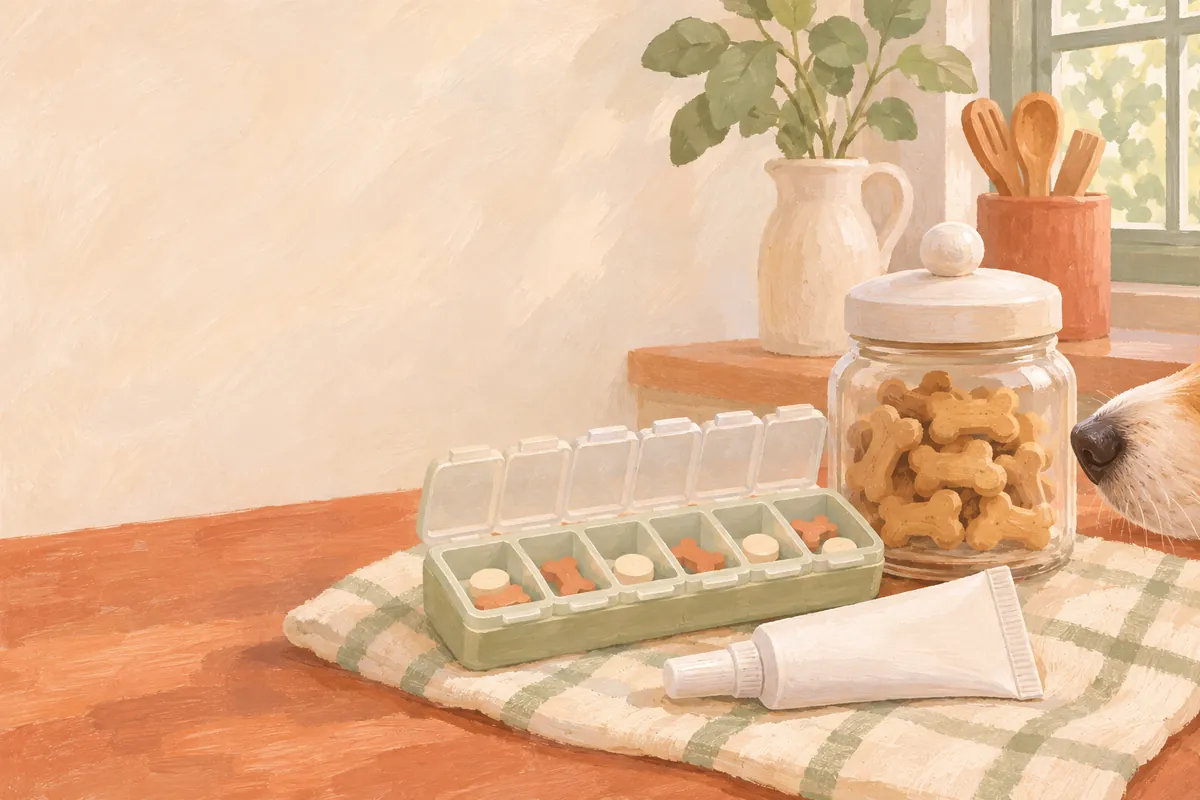
Pet medication tracker: the medicine list
Fill in one row per medicine, copying from the prescription label or the vet's instructions. Do not round or simplify.
| Medicine | Strength | Dose (as on label) | How often | Start | End or next review | Prescribed by | Refills left |
|---|---|---|---|---|---|---|---|
| (example) Ear drops | as on bottle | as on label | twice a day | Mar 3 | Mar 13 | Oak Street Vet | 0 |
| (example) Monthly flea and tick | as on box | 1 dose | monthly | Jan 1 | ongoing | Oak Street Vet | 3 left in box |
| (example) Joint supplement | as on tub | as advised by vet | daily, with food | Feb 10 | next check-up | vet advised | - |
Add a line at the top with your pet's name, current weight and any known allergies or past reactions. Weight matters because many doses are based on it.

PawLedger keeps medication and parasite prevention alongside vaccines, with reminders; when you mark a repeating treatment done, it sets the next date. Get it on Google Play
Daily dose log
For a course of tablets, drops or anything given more than once a day, use a grid. Whoever gives the dose ticks the box and initials it.
| Day | Morning | Evening | Given by | Notes |
|---|---|---|---|---|
| Mon | ✓ | ✓ | A / B | |
| Tue | ✓ | A | evening dose missed, called vet | |
| Wed |
- Keep the log where the medicine is, such as on the fridge, so it gets filled in at the moment of giving.
- Write down anything unusual: vomiting, a skipped meal, lethargy, a dose spat out.
- If a dose is missed, do not double up on your own. Follow the label or ask your vet what to do.
- Finish the course your vet prescribed unless the vet tells you to stop.
Tracking monthly flea, tick and heartworm doses
Monthly preventives are the easiest to forget, because a month is long enough to lose track of whether you gave the last one. Three habits help:
- Give the dose on the same date each month, for example the 1st.
- Write the date in the log the moment you give it, and the next due date beside it.
- Set a repeating reminder a few days before, so you have time to buy more if the box is empty.
Which products your pet needs, the right size or strength, and whether they are given all year or only part of it are decisions for your vet. Products for dogs and cats are not interchangeable, so do not give one species' preventive to another without your vet's say-so.
Refills and safe storage
Note the refill count and the date the medicine will run out. Ask for the refill a week or so before, since clinics and pharmacies may need time to authorize it.
The FDA's advice on storing pet medications comes down to a few points:
- Keep each medicine in its original labeled container, with your pet's name and the directions readable.
- Store it where pets cannot reach it; climbing pets get onto counters and some chew through child-resistant packaging.
- Keep pet and human medicines apart to avoid mix-ups.
- Dispose of expired or unwanted medicine through a take-back program.
If your pet swallows a medicine by mistake, contact your vet or the ASPCA Animal Poison Control Center straight away.
Keep the log with the rest of the record
Medicines belong in your pet's wider health history: which vet prescribed them, for what, and how it went. Our pet medical records guide shows how to keep that history in one place.
Stop wondering whether the dose was given
PawLedger lists the treatments due in the next 30 days for each pet, with overdue items counted at the top.
Get it on Google PlayiPhone version coming soon
More guides
- Dog Vaccination Record: What to Include, With a TemplateWhat a dog vaccination record should show, a template you can copy, how to fill it in from vet paperwork, and where to get a copy when a kennel or groomer asks.
- Core Vaccines for Dogs: Core vs Non-Core ExplainedWhich dog vaccines are core and which are non-core, what DHPP and similar names mean, why rabies is often required by law, and how your vet sets the schedule.
- Pet Medical Records: How to Get, Organize and Share ThemHow to request pet medical records from your vet, what to ask for, how to organize your dog's or cat's health records at home, and how to hand them to a new vet.
- Cost of Owning a Dog per Year: Build Your Own BudgetWork out the cost of owning a dog per year and per month from your own numbers: the recurring costs, first-year extras, an example budget, and how to plan for vet bills.
Published by Zoranta, the developer of PawLedger.